Contractors Pollution Liability: The Coverage Gap Your GL Policy Doesn't Fill
By Josh Cotner
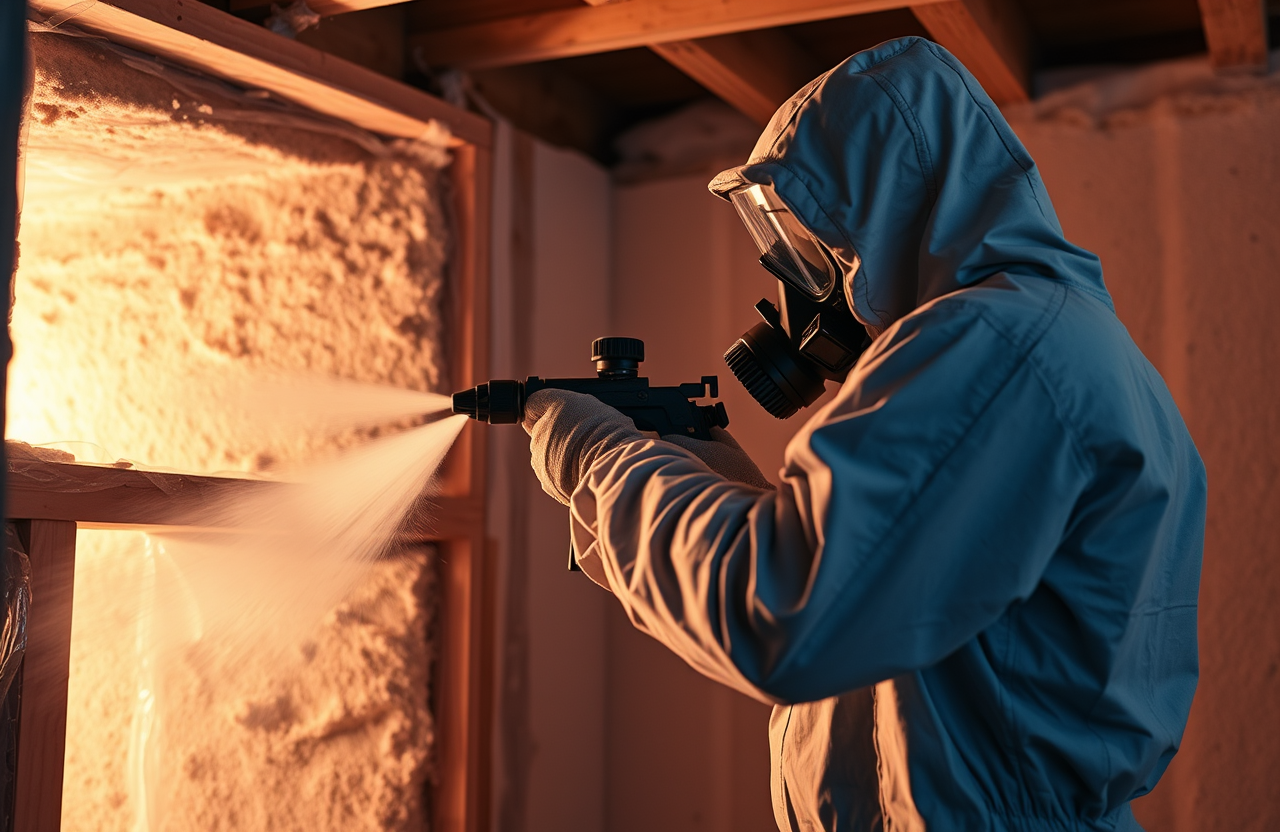
Contractors Pollution Liability: The Coverage Gap Your GL Policy Doesn't Fill
Ask ten spray foam contractors what their general liability policy covers, and most will describe it accurately for a normal construction trade — property damage, bodily injury, the stuff that happens when something goes wrong on a jobsite. Ask them whether it covers a chemical exposure claim, and you'll usually get a shrug. "It's liability insurance, right? It covers liability."
It doesn't. Not this kind. And that's not a technicality — it's baked into how standard GL policies are written.
Why GL stops where pollution starts
Standard general liability policies commonly carry a pollution exclusion. It's not unique to spray foam contractors — it's boilerplate in most GL forms across construction trades — but it lands differently on you than it does on a framer or a drywall crew, because your trade is built around applying a chemical compound under pressure, indoors, in occupied buildings. Isocyanates are the active chemistry in spray polyurethane foam, and exposure to them is a recognized respiratory and sensitization hazard. That's not a fringe risk sitting at the edge of your operation — it's the center of it.
So when a GL policy carves out pollution-related claims, it's not carving out some obscure scenario that might never come up. It's carving out the exposure your entire business model creates every time a crew rigs a sprayer and goes to work. That's the gap Contractors Pollution Liability (CPL) exists to close.
CPL is written specifically to pick up where GL leaves off: bodily injury from isocyanate and chemical exposure during application, third-party property damage from chemical releases, clean-up costs, and defense costs for pollution-related claims. It's not a nice-to-have add-on. For a trade that sprays chemical compounds for a living, it's closer to a second required policy than an optional one.
A scenario worth walking through
Here's how this plays out in real life, and why it matters which policy actually responds.
A crew sprays an attic or a crawlspace. Ventilation looked fine, cure time was respected, everyone followed the process. Job closes out, invoice gets paid, everyone moves on. Five or six weeks later, the homeowner calls — not about a foam defect, not about property damage, but about a lingering chemical smell and a family member with respiratory irritation that started sometime after the job and hasn't fully gone away.
That's a fundamentally different claim than the kind GL was built to answer. It isn't a slip-and-fall, it isn't a damaged fixture, it isn't overspray on a neighbor's car. It's a bodily injury claim rooted in chemical exposure and off-gassing — and off-gassing complaints are exactly the kind of claim that shows up well after the crew has left, because that's how the underlying chemistry works. Nobody notices anything wrong on day one. The complaint surfaces later, sometimes much later, once someone connects a lingering odor or a health symptom back to the job.
If your only coverage is a standard GL policy with a pollution exclusion, that claim can land on your desk with nothing behind it. Not because you did the job wrong, but because the type of harm being alleged is chemical in nature, and that's precisely the category GL was written to exclude. CPL is the policy built to answer that call — it responds to respiratory and sensitization claims tied to chemical exposure, whether that exposure happened during application or surfaced afterward as off-gassing.
Claims-made vs. occurrence — and why it's not a minor detail here
CPL policies are typically written on one of two triggers, and the difference matters more for spray foam contractors than it does for a lot of other trades.
Occurrence-form CPL covers claims arising from work performed while the policy was active, regardless of when the claim is actually filed down the road. Do the job this year on an occurrence policy, and a claim that surfaces two years from now — even if you've since switched carriers or let the policy lapse — still traces back to the coverage that was in force when the work happened.
Claims-made CPL works differently. It covers claims made during the policy period itself, which means your coverage on any given job depends on the policy being active at the moment the claim is filed, not just at the moment the work was done. If you cancel the policy or switch carriers, you need a "tail" — an extended reporting period — to keep coverage in place for claims that surface after the policy ends but relate to work done while it was active. Without that tail, a claims-made policy can leave old jobs completely uncovered the moment you move on.
Given how this trade actually generates claims — an off-gassing complaint surfacing weeks or months after the crew is long gone — occurrence coverage is generally the better structural fit for spray foam contractors. Your completed-operations exposure doesn't expire when the invoice clears, and your CPL trigger shouldn't either. That's not a blanket rule for every operation, but it's the direction most spray foam contractors should be leaning when they're comparing forms.
If a standard carrier has already said no
Some spray foam contractors come to this conversation already having been declined. A standard-market carrier looked at the isocyanate exposure inherent to the work and passed. If that's you, it doesn't mean CPL isn't available — it means you're not shopping the right part of the market.
The excess & surplus (E&S) lines exist specifically for operations that standard, admitted carriers won't write. E&S pollution markets regularly write CPL for spray foam contractors turned down elsewhere over exactly this exposure. It's a different form and pricing structure than the standard market, but it's a real, workable path to coverage — not a last resort you should be embarrassed about.
It's also worth knowing that carriers approach the GL/CPL relationship differently. Some offer combined GL+CPL programs bundled under one policy; others price and issue them as genuinely separate policies from separate underwriting. Neither approach is automatically better, but they behave differently at claim time — when a loss could plausibly be argued either way, which policy responds first and how the two coordinate is worth understanding before you need the answer, not after.
What you can do now
If you've never had a CPL conversation with your current carrier — or if the only CPL quote you've ever seen is the one you're currently paying for — that's the gap to close first. This isn't a coverage line where "I have a policy" and "I have the right policy" are the same statement. Whether occurrence or claims-made fits your operation better, whether your current carrier's pollution exclusion leaves you more exposed than you realize, and whether the standard market is even the right place to be shopping — these are all things worth getting a second opinion on before a claim forces the question.
If you've been declined before, don't treat that as the end of the search. And if it's simply been a while since anyone actually compared your CPL form against another carrier's — limits, tail provisions, how it coordinates with your GL — that comparison is worth doing now, while it's just due diligence, and not later, while it's a claim.
Need this coverage for your spray foam business?
Get a real quote in about 15 minutes — we shop A-rated specialty contractor markets.